

Oncologist Andriy Hardashnykov outlined the symptoms of melanoma and guidelines for safe tanning. To detect cancer, one should assess mole changes using the AKORD system.
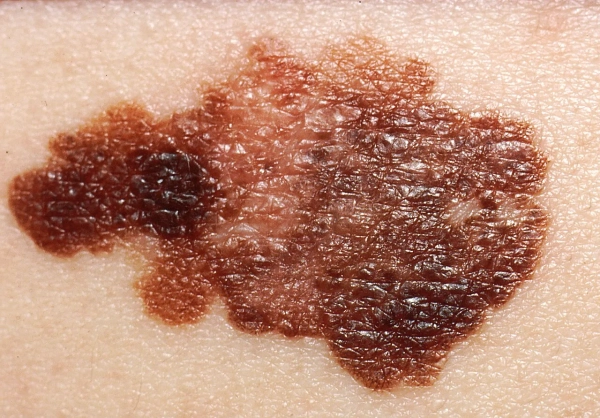
Melanoma Day in Ukraine in 2026 falls on May 18. Melanoma, a malignant oncological disease, can disguise itself as a regular mole, but early detection significantly increases the chances of successful treatment. Doctor-oncologist Andriy Hardashnykov shared with UNN journalist details on which skin changes to look out for, who is at risk, and why even minor mole changes should not be ignored.
Details
Melanoma is a malignant oncological disease that develops from melanocytes. These cells are responsible for skin pigment and tanning. Because of this, melanoma is often associated with moles, although not every skin growth is dangerous.
Melanoma is a malignant tumor whose substrate is the melanocyte cell. These are the cells that have pigmentation and thanks to which we tan. I wouldn’t say melanoma looks like a mole. But very often it develops precisely at the site of a mole. Although there are also non-pigmented melanomas, which have no characteristic color at all.
– explains Andriy Hardashnykov.
The doctor advises paying attention to so-called “warning signs” of moles. For this, there is a special evaluation system called “AKORD” or the international ABCDE system. They help notice changes that may indicate the development of melanoma.
If ordinary moles are often symmetrical and even, then with the development of a malignant process, asymmetry may appear. The edges become uneven, and the coloration is heterogeneous. Different areas of the mole may have different colors. It is also important to pay attention to an increase in size, especially if the diameter exceeds 6 millimeters, and to any dynamics – bleeding, growth, or other changes.
– notes the oncologist.
According to the oncologist, the appearance of one or more such signs does not automatically mean a diagnosis of “melanoma.” However, it is a valid reason to consult a doctor and undergo an examination.
This is not a reason to panic immediately or to self-diagnose. But it is a reason to consult a doctor. Specialists have a dermatoscope – a device that resembles something between a magnifying glass and a small microscope. Thanks to it, it is possible to assess whether there is a suspicion of a malignant process. If suspicions are confirmed, then specialized diagnostic methods are carried out.
– says Andriy Hardashnykov.
People with fair skin that burns easily should pay special attention to their skin condition, says the oncologist. Ultraviolet radiation is one of the risk factors for melanoma development. At the same time, the doctor emphasizes that tanning itself is not forbidden, but it is important to adhere to safety rules.
Most often, people with fair skin who frequently get sunburned are in the risk group. But this does not mean that others can be irresponsible towards themselves. Tanning is allowed, but not during the peak sun activity. It is recommended to be in the sun before 10:00 AM or after 5:00 PM. It is also important to use sunscreen and not spend hours under direct sunlight continuously, especially after a long break.
– emphasizes the doctor.
Andriy Hardashnykov separately advises regularly checking large moles and observing their behavior. If after examination the doctor sees no suspicious changes, it is usually sufficient to have a preventive check-up once a year. However, in case of any changes or doubts, one should not delay.
If a mole is stable, does not change, and the doctor sees no threats, then it is usually sufficient to check it once a year. But if there is growth, a change in color, bleeding, or any other suspicious behavior, then you need to consult a specialist immediately, because the earlier melanoma is detected, the greater the chances of successful treatment.
– summarized Andriy Hardashnykov.